

CITY OF HELSINKI
Cultural centres renewing to meet the needs of tomorrow’s neighbourhoods
Our aim was to clarify the vision and role of the regional cultural centres (Vuotalo, Malmitalo, Kanneltalo and Stoa) as places that shape the development of their neighbourhoods and enhance residents’ quality of life. What would cultural centres look like if they were reimagined for the 2030s?
In this visioning process, we focused on long-term strategic transformation—clarifying the customer experience, strengthening the service model, and rethinking how services are delivered. Empathy and inclusion – understanding the needs of diverse groups and partners – served as the foundation for this renewal. The process engaged up to 2 900 residents and stakeholders, and in close collaboration with cultural centre staff, we co-developed solutions to turn the vision into reality.
Co-designing of the new vision was effective because the participatory process was directly derived from the objectives. The process enabled iterative learning and adaption to new findings along the change journey. The different phases were also strongly linked to the decision-making and the process of managing organizational change.
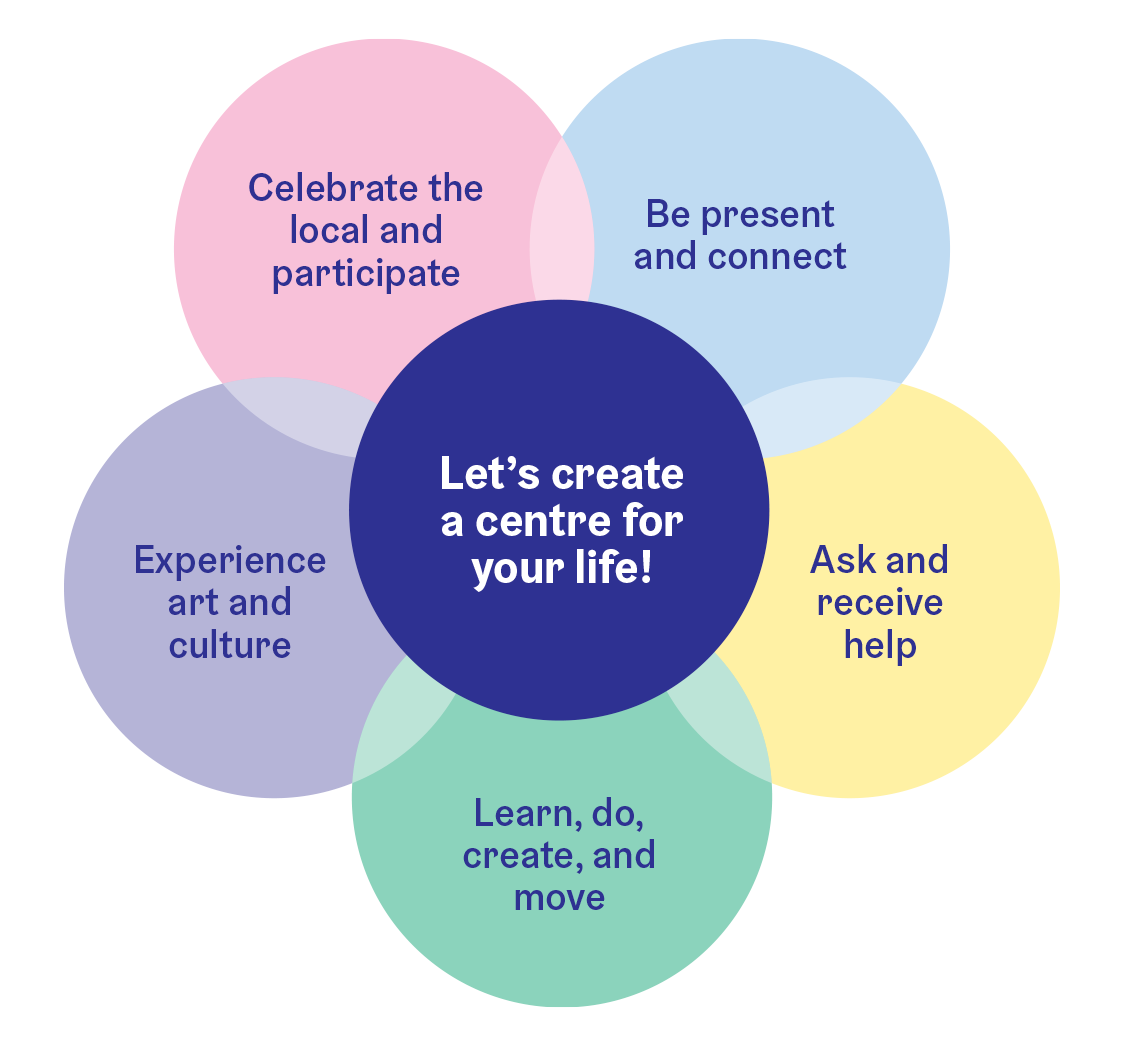
In the light of the new vision, the role of cultural centres will increasingly be that of an enabler and connector: bringing people together, inspiring local engagement, and mobilizing resources to foster innovation and drive a more sustainable future.
Challenge & Objective
Helsinki is diversifying and growing rapidly – especially in the city districts where the cultural centres are located. On the other hand, there is also growing uncertainty and complexity, widening gaps in learning, wellbeing and inclusion and narrowing social circles, which makes us less sensitive to how people outside our “social bubble” live. As Helsinki grows, the character of different neighbourhoods as more than just living spaces becomes more important. In the future cities need places that contribute to quality of life, support social interaction and deepen people’s connection to their neighbourhoods.
What kind of place would the cultural centres be if they were reimagined for the 2030s? How can cultural centres contribute to strengthening the vitality of neighbourhoods and local identities? How can cultural centres redefine their role as urban spaces and hubs that empower people, foster encounters and social dialogue, bring people together around art and learning, and create hope and a more sustainable future? These questions served as guiding framework as we set out to create a new vision. Our goal was to establish a long-term strategic direction, enhance the customer experience and service concept, and develop new ways of delivering services.
The vision work is part of a broader strategic planning process and in the coming years it will also it will also guide the transformation of service environments within the cultural centres.
Approach
Because no one knows the neighbourhoods better than the people who live there, we invited citizens to participate in the vision process. Empathy and inclusion—gaining a deep understanding of the needs of diverse groups and partners—naturally formed the foundation of our approach. Inclusivity issues are not new to the regions, but they are in a state of flux and therefore require particularly careful consideration. Altogether, the process involved a total of up to 2 900 citizens and stakeholders.
We designed and tailored our participatory methods to meet the needs of different groups, ensuring constructive dialogue even in a polarized environment. Our diverse participation toolkit included art-based methods, digital tools, citizen encounters, school collaborations, meetings with the third and fourth sector actors and targeted events for partners. To illustrate alternative development paths and bring future possibilities to life, we used a story-telling approach, allowing different groups to engage in meaningful dialogue about desired futures for the centres.
As part of the vision work, we aimed to reinforce the role of cultural centres as dynamic platforms for collaboration and community-building. This is why partners were actively engaged throughout the process. We also placed a strong emphasis on staff participation. Thanks to the long continuity and thematic structure of the internal workshops, we were able to create ways and solutions with the staff members and different teams to bring the vision to life in the future years.
The co-creation process was highly effective, as it was directly aligned with the project’s strategic goals. It followed an iterative and learning-driven approach, allowing the vision to evolve based on emerging insights. The different phases were also strongly connected to the decision-making and the process of managing organizational change.
2 350
city residents heard
300
stakeholders and partners reached
250
City of Helsinki’s personnel reached
2 900
total voices heard throughout the vision work
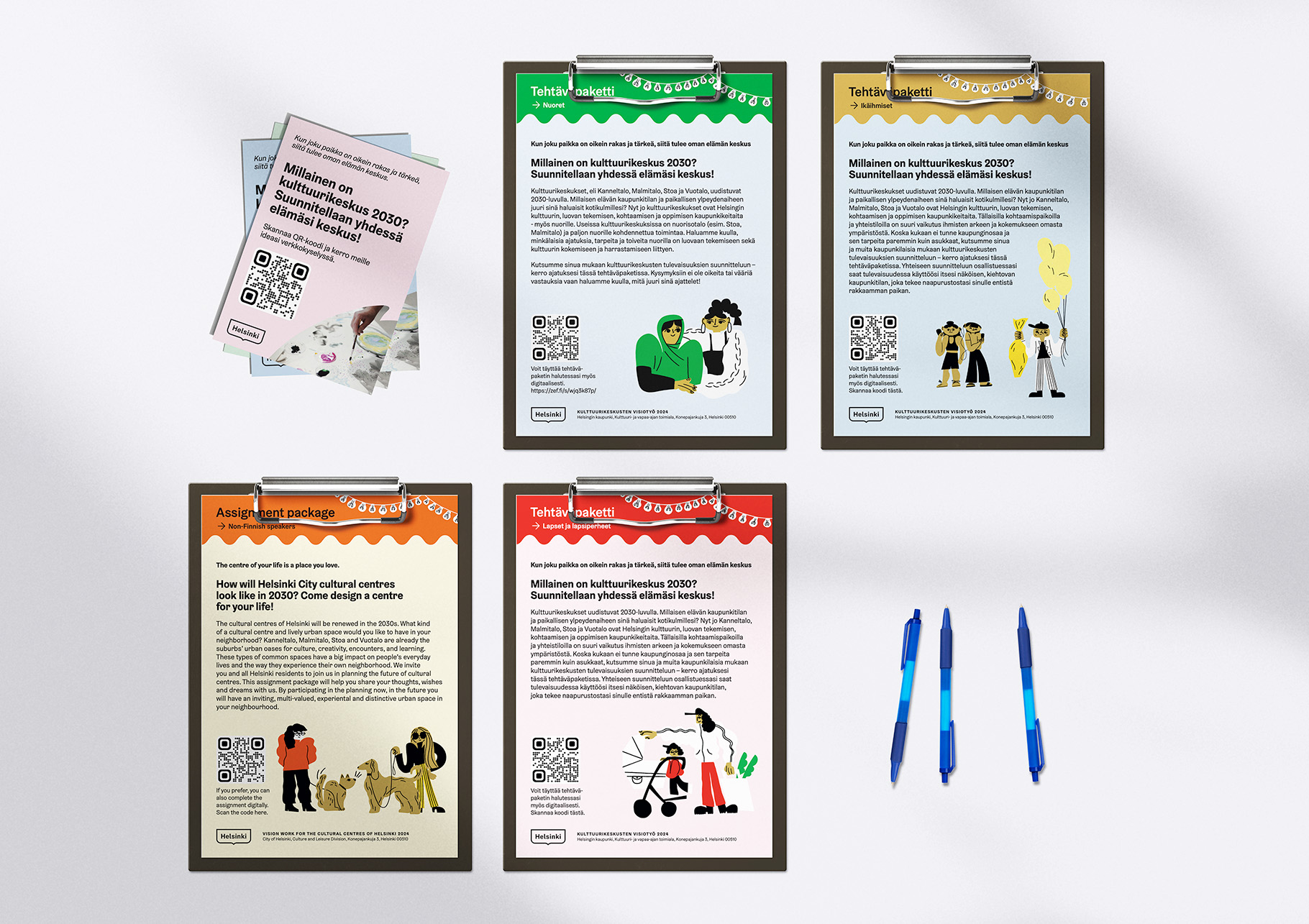
A total of 2 650 city residents and partners, as well as 250 staff representatives took part in developing the new vision. This made it possible to create a distinctive vision for each centre — one that will carry them far into the future while also strengthening their role as shared places for citizens and as positive forces in the development of their neighborhoods.
Outcome
The biggest change will be a new way of working – one that enables cultural centres to respond sensitively to the needs of residents and partners and to collaborate with them as equals. In the light of the vision created, the cultural centre is no longer just a venue for arts and culture, an environment for learning and education, a youth centre or a library – it’s more. Through cross-sector synergies, it will serve as a meeting place and a diverse urban experience for collective local action in the neighbourhood where not only arts and culture but also the voice of the citizens will be heard. Moving forward, the role of cultural centres will increasingly be that of an enabler and connector: bringing people together, inspiring local engagement, and mobilizing resources to foster innovation and drive a more sustainable future.
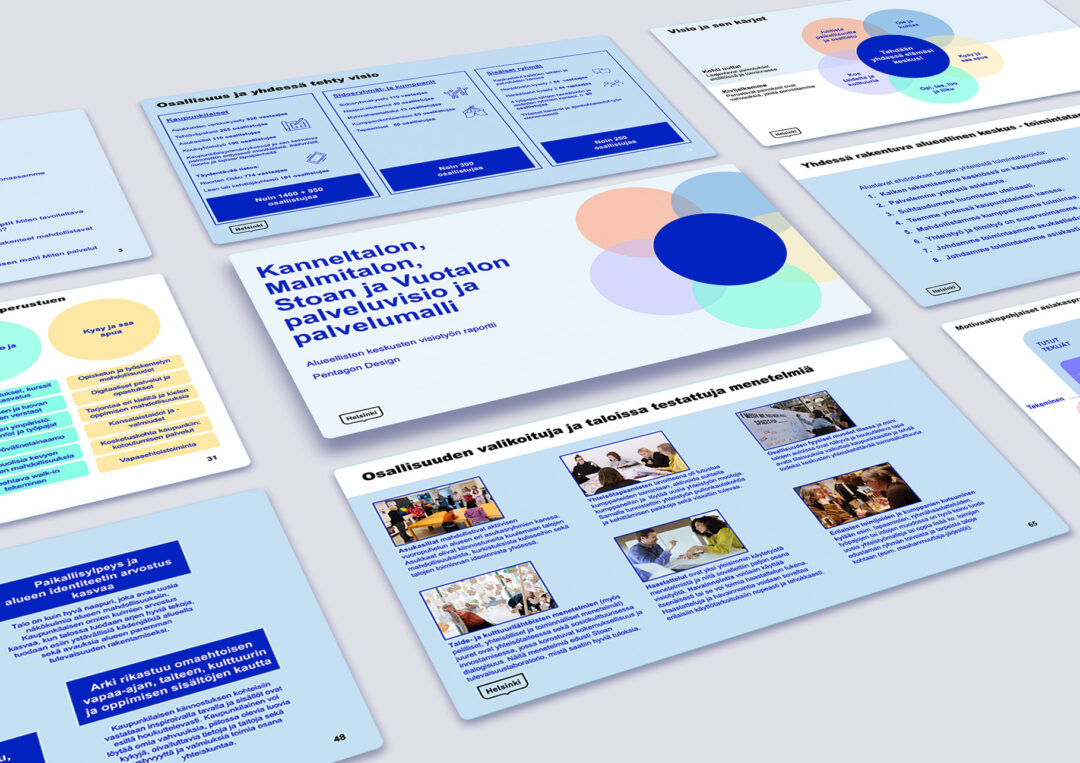
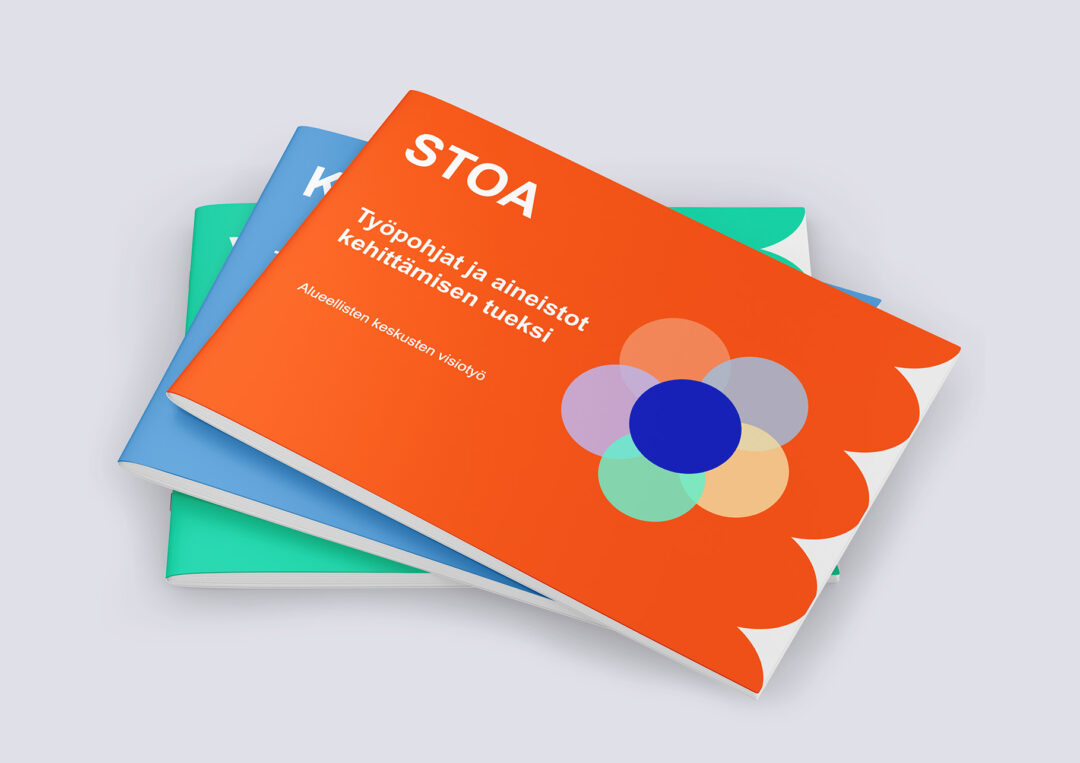
The vision process resulted in:
- Service vision and mission statement, i.e. a description of the purpose and mission
- Service model, i.e. service offering and customer experience, among others
- Operational model, including organizational structures, teams and ways of working together
- Participatory model, i.e. conceptualizing methods for participation and engagement, strengthening the role of the centers as enablers and platforms
- Roadmaps of key themes that together will serve as long-term tools for the strategic development work
Images: Vesa Laitinen, Karun Verma